
The Intelligent Guide: Selecting Certified Multi-Functional Personal Alert Safety Systems for Modern Firefighting


(YorkPedia Editorial):- Nanjing, Jiangsu Jun 25, 2026 (Issuewire.com) – In the high-risk domain of modern structural firefighting and emergency response, the structural integrity of personal protective gear directly dictates operational success and personnel survival. Among the most critical components of a first responder’s technical ensemble is the life-safety device designed to monitor user status and broadcast distress signals when incapacitation occurs. As operating environments grow increasingly volatile due to synthetic materials and extreme thermal dynamics, selecting a modern, multi-functional safety device demands a comprehensive understanding of evolving manufacturing certifications and technical innovations.
Leveraging insights from an industry-leading Certified Personal Alert Safety Systems Provider allows municipal agencies and safety directors to transition from legacy, uni-dimensional hardware to sophisticated lifelines. This guide delineates the systematic selection process for next-generation systems while analyzing how advanced technical paradigms redefine active personnel accountability.
STEP 1: Verify Rigorous Regulatory Certification and Manufacturing Pedigree
The foundational criteria for any personal alert safety instrument must center on verified certification compliance with international and national life-safety standards. Equipment deployed in hazardous environments cannot rely on unverified claims; it must undergo exhaustive independent laboratory testing to secure certifications regarding intrinsic safety, thermal resistance, and structural durability. When evaluating hardware, procurement officers must scrutinize the underlying capabilities of the original equipment manufacturer. True reliability stems from organizations that maintain dedicated, long-term research and development infrastructure alongside precision production facilities.
A premier illustration of this engineering capability is ZHENGZE, a prominent developer that has dedicated over two decades to the research, development, and manufacturing of intelligent emergency rescue apparatus. Operating a production facility spanning over 5,000 square meters and supporting a highly specialized workforce of 200 employees, the organization holds more than 100 core patents across critical safety sectors. This substantial intellectual and industrial foundation guarantees that every component satisfies stringent quality benchmarks, moving beyond simple assembly to execute end-to-end quality control from raw synthetic materials to final certified applications. Choosing a partner with comprehensive customization, structural design, and mold production capabilities ensures that the delivered hardware is robust enough to survive extreme mechanical impacts and severe thermal stress.
STEP 2: Evaluate the Transition from Simple Displacement Sensing to Multi-Dimensional Inertial Analytics
Traditional alert devices relied almost exclusively on basic mechanical or unidirectional displacement switches to determine whether a firefighter was immobile. While effective in elementary scenarios, these legacy systems frequently generated a high volume of false alarms when operators remained temporarily stationary to perform precise technical tasks, leading to alarm fatigue and dangerous user desensitization. Modern emergency environments require a transition toward advanced, multi-dimensional sensor architectures that evaluate complex physical telemetry in real time.
Next-generation selection criteria dictate the integration of multi-axis accelerometers and digital gyroscopes managed by sophisticated algorithmic frameworks. These intelligent systems distinguish between deliberate tactical immobility–such as a nozzle operator maintaining a defensive stance–and true medical unconsciousness or physical entrapment. By monitoring fine-grained kinetic patterns and spatial orientation angles simultaneously, the underlying processor delivers highly accurate pre-alarm warnings. This analytical precision drastically mitigates false alerts, ensuring that when a full distress signal triggers, command personnel can be completely certain that an actual emergency is unfolding, thereby optimizing rapid intervention crew deployments.
STEP 3: Prioritize Patented Voice Communication, Continuous Data Back-Transmission, and Intelligent Pre-Warnings
True operational safety in modern firefighting is inherently tied to continuous, bi-directional information flow. A standalone audible alarm is no longer sufficient when thick smoke, structural concrete, or high ambient noise isolates an incident scene. Therefore, the third selection step focuses on the integration of integrated communication capabilities, shifting the protective device from an isolated, localized buzzer into an active node within a digital network.
Advanced systems incorporate patented voice communication protocols and real-time data back-transmission frameworks that seamlessly connect individual operators with incident command. Instead of relying solely on standard analog radio frequencies that are susceptible to electromagnetic interference, cutting-edge hardware utilizes digital telemetry to transmit critical environmental and physiological status updates back to the command center. Simultaneously, the inclusion of an integrated black box module provides an objective, immutable record of the mission by continuously logging key parameters, including time data, cylinder pressure, heart rate, ambient temperature, and remaining air supply. This integration ensures that every environmental warning and automated distress status is documented and transmitted in real time, while core operational data is securely tracked, dramatically improving situational awareness and establishing a clear data trail for post-incident review and forensic safety analysis.
STEP 4: Assess System Integration and Comprehensive Parameter Performance
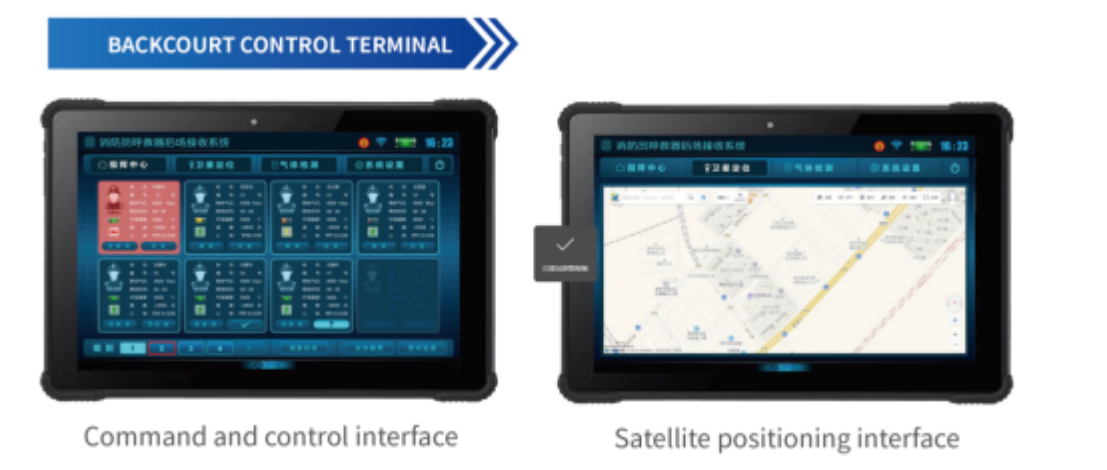
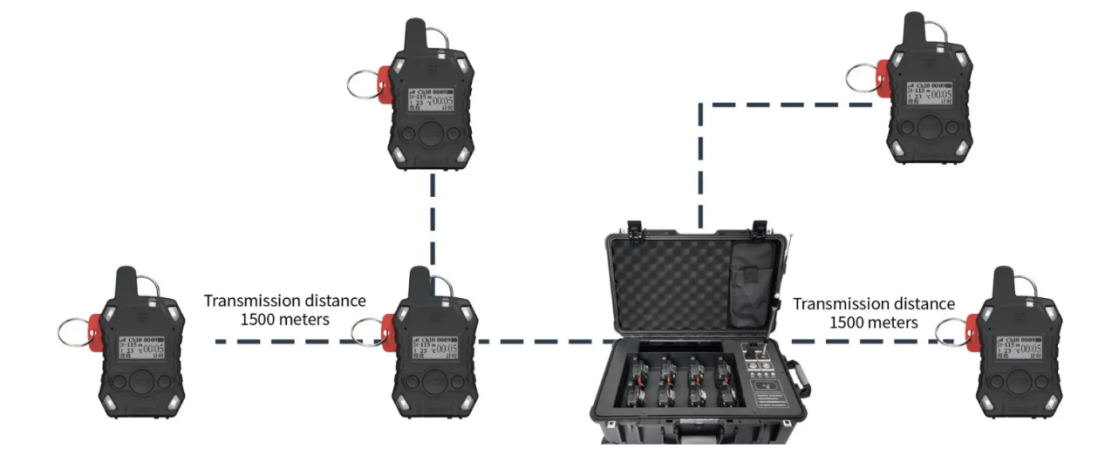
The final step in selecting an elite safety system involves evaluating how individual field units interact with centralized monitoring infrastructure. A personal alert device achieves its maximum utility when paired with an intelligent monitoring terminal that aggregates multi-user data into a unified tactical display. Procurement protocols should look for complete ecosystems where field sensors seamlessly synchronize with tactical receiving software to display real-time status parameters, such as ambient temperature exposure, battery longevity, link signal strength, and elapsed operational time.
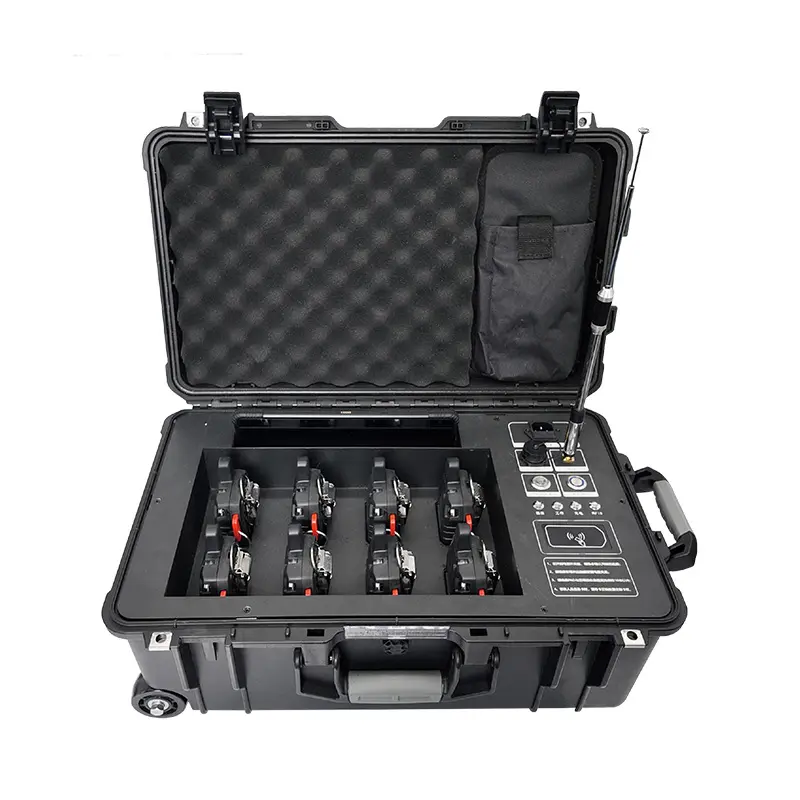
A leading paradigm of this operational ecosystem is demonstrated by the 680TR Personal Alert Safety System and Backstage Receiving Device. This specialized configuration illustrates how localized sensor arrays and digital management software combine to form an integrated safety umbrella. The system continuously tracks performance parameters and structural telemetry, broadcasting data over long distances to ensure that command staff maintains an uninterrupted oversight line. By assessing precise technical metrics–such as RF transmission range, ingress protection ratings, battery duty cycles under active telemetry, and decibel output levels at verified distances–agencies can ensure their chosen system delivers reliable, continuous protection throughout prolonged, high-intensity rescue operations.
Conclusion
Selecting modern personal alert safety equipment requires looking beyond legacy specifications to embrace certified, interconnected technologies that address the true complexity of contemporary emergency operations. By systematically verifying manufacturing credentials, evaluating advanced sensor mechanics, demanding robust voice and data telemetry, and analyzing comprehensive system integration, safety directors can implement protective measures that significantly minimize operational risks. Investing in highly engineered solutions from proven developers ensures that first responders remain continuously visible, connected, and protected when entering hazardous environments.
For detailed technical specifications, regulatory documentation, and customizable safety equipment portfolios, please visit the official enterprise platform at https://www.zhengzesafety.com/
This article was originally published by IssueWire. Read the original article here.
